A Small Guide to Flour, Crumb & Texture
What Flour Really Does
Protein Builds Structure
Bread flour is higher in protein, which forms the gluten that traps gas and holds an open crumb. Pastry and cake flours are lower, so they bake into softer, more tender textures.
Whole Grain Adds Character
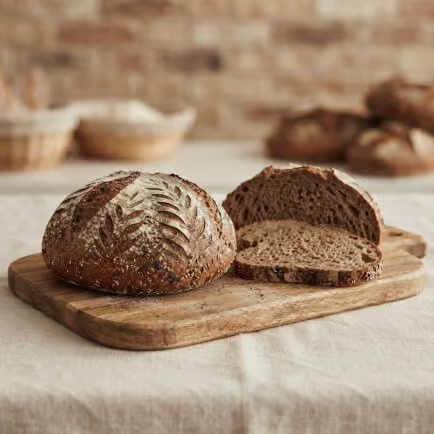
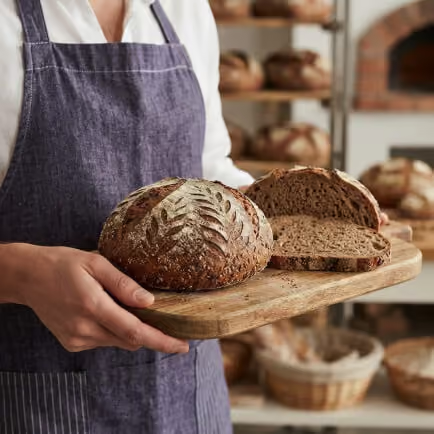
Whole wheat and rye bring the bran and germ along with them. They add flavour, colour and nutrition, but they absorb more water and make a closer, denser and moister crumb.
Water Shapes The Crumb
Hydration is the amount of water compared to flour. A wetter dough, like our focaccia, bakes into large irregular holes, while a stiffer dough gives an even, tight crumb for sandwiches.
Higher hydration also means a thinner, crisper crust and a longer-keeping loaf. It is harder to handle at first, but a few gentle folds give the dough all the strength it needs.
Reading A Slice
Open And Glossy
Large, shiny holes with a slightly translucent crumb mean a well-fermented, well-hydrated dough. That is the slice you want for a rustic sourdough or a ciabatta.
Tight And Even
Small, uniform holes suit a sandwich loaf or a brioche. They hold butter and fillings without letting them fall through, and they toast evenly from edge to edge.